
Bhatkhande vs Vishnu Digambar Swarlipi – Complete Guide
Indian classical music is one of the richest traditions in the world, filled with ragas, talas, and beautiful compositions. To preserve and teach this vast knowledge, notation systems were created in the 20th century. The two most important ones are Bhatkhande Swarlipi and Vishnu Digambar Swarlipi.
In this post, we will understand:
-
- What these systems are
-
- How they represent swaras and talas
-
- The difference between the two
Why Do We Need Swarlipi?
Before these systems, Indian music was mainly taught through the guru-shishya parampara (oral tradition). But with the growth of music schools and universities, there was a need for a standard written form of swaras and talas.
That’s when Pt. Vishnu Narayan Bhatkhande and Pt. Vishnu Digambar Paluskar introduced their own systems of swarlipi.
Bhatkhande Swarlipi
-
- Developed by Pandit Vishnu Narayan Bhatkhande (1860–1936)
-
- Based on Devanagari script
-
- Swaras written as: सा, रे, ग, म, प, ध, नि
-
- Matras (beats) are written below the swaras
-
- Special symbols for komal (flat) and tivra (sharp) swaras
-
- Clear marking of sam, tali, khali in talas
-
- Widely used in music universities and textbooks
 This is the most common notation system in North Indian classical music.
Vishnu Digambar Swarlipi
-
- Developed by Pandit Vishnu Digambar Paluskar (1872–1931)
-
- Also uses Devanagari script
-
- Swaras written in the same way: सा, रे, ग, म, प, ध, नि
-
- Rhythm is shown more through placement and alignment
-
- Komal and Tivra swaras shown with marks above letters
-
- Mostly used in Gandharva Mahavidyalaya and Paluskar’s institutions
This system is simpler in appearance, especially for beginners.
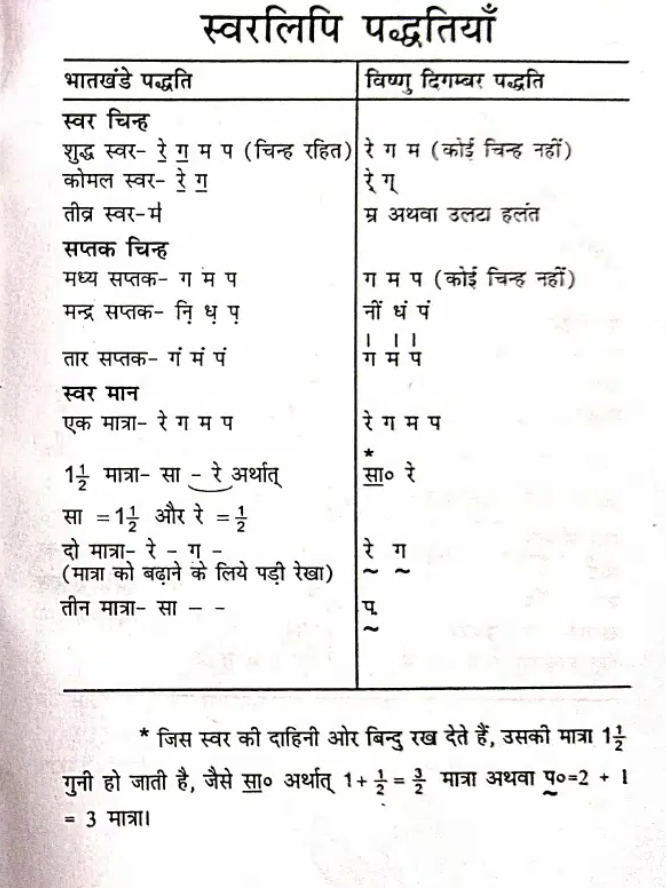
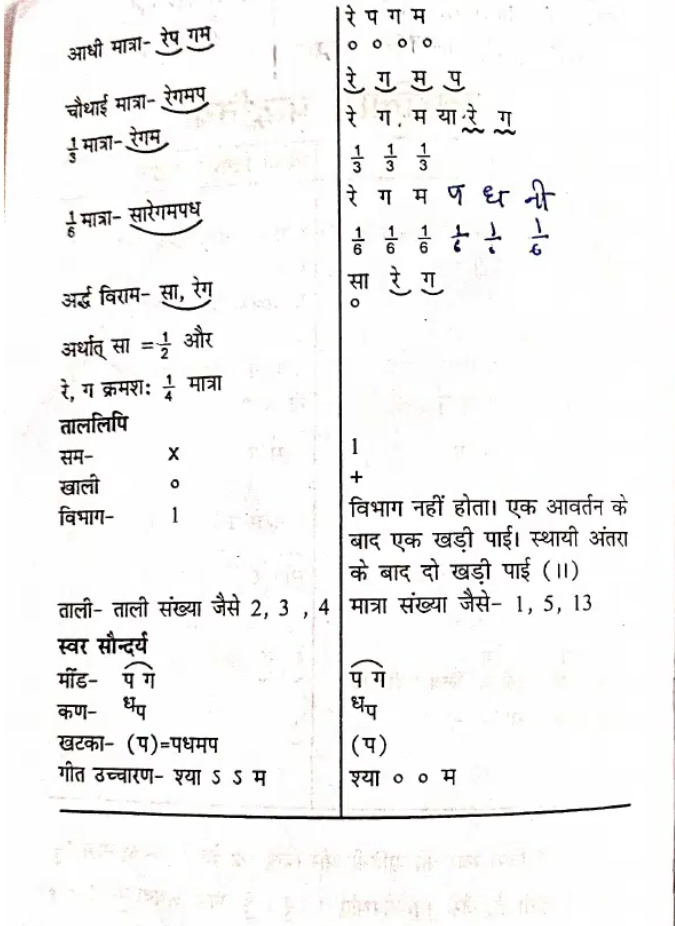
Key Differences Between Bhatkhande & Digambar Swarlipi
| Feature | Bhatkhande Swarlipi | Vishnu Digambar Swarlipi |
|---|---|---|
| Inventor | Pt. Vishnu Narayan Bhatkhande | Pt. Vishnu Digambar Paluskar |
| Script | Devanagari | Devanagari |
| Rhythm Representation | Numbers & symbols for matras | Visual alignment in lines |
| Komal/Tivra Swaras | With special symbols | With marks above letters |
| Institutions | Universities, schools | Gandharva Mahavidyalayas |
| Popularity Today | Very widely used | Limited but still taught |
Which One Should You Learn?
-
- If you are preparing for music exams or studying in a university, you will mostly learn Bhatkhande Swarlipi.
-
- If you are connected with Gandharva Mahavidyalaya or Paluskar’s tradition, you may learn Vishnu Digambar Swarlipi.
Once you know one system, you can easily adapt to the other.
 Conclusion
Both Bhatkhande Swarlipi and Vishnu Digambar Swarlipi revolutionized Indian music education. They preserved thousands of bandishes and made learning structured and systematic. Even today, these systems form the foundation of Hindustani music teaching.
Whether you are a beginner or an advanced learner, understanding these notations will bring you closer to the heart of Indian classical music.

This article really help me a lot to learn and develop a deep understanding about music.
Thankyou you
Very well written article for all the music lovers.Great. keep going n shining.🌟🌟